X — Stress, Anxiety & Libido: A Nervous System Perspective | The A–Z of Stress & Anxiety
Feb 19, 2026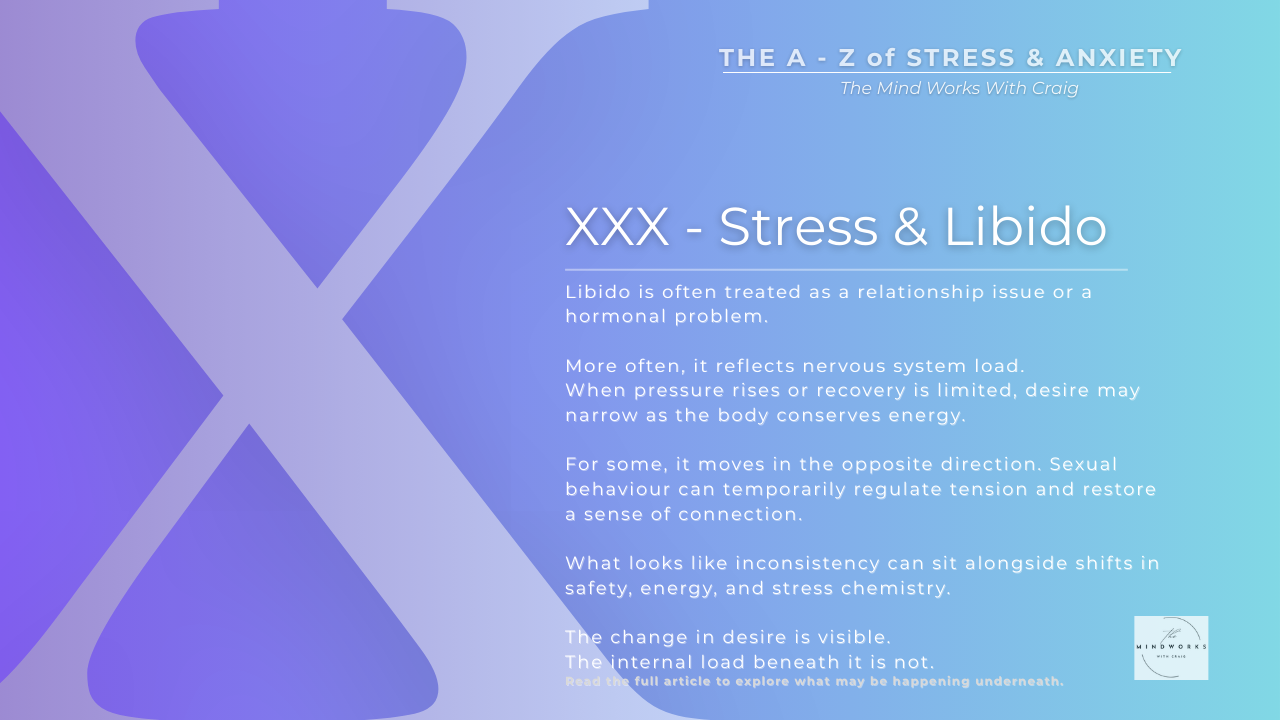
X – Stress, Anxiety, Libido and Sex Drive
Introduction
Within The A–Z of Stress & Anxiety, each letter represents a different doorway into understanding how our internal system responds to pressure. Some entries are cognitive. Others are emotional or behavioural. This one is physiological and relational.
Changes in libido and sex drive are rarely spoken about in the context of stress, yet in clinical work they arise often. Sometimes quietly. Sometimes with confusion or shame.
Stress and anxiety do not only affect thoughts and mood. They influence appetite, sleep, energy, digestion and, very commonly, sexual desire. For some people desire reduces. For others it increases. Both patterns can make sense when viewed through the lens of nervous system state rather than personal defect.
This entry is not about performance or technique. It is about orientation. It is about understanding how stress chemistry, safety, and internal load shape sexual energy.
What Stress, Anxiety and Libido Often Look Like in Real Life
In lived experience, this rarely presents as a neat statement such as “my stress is affecting my libido.”
Instead it can look like:
-
Feeling physically tired but mentally wired, with little interest in intimacy
-
Wanting closeness but feeling emotionally flat or disconnected
-
Experiencing desire but finding it difficult to stay present
-
A sudden drop in sex drive during periods of work pressure or burnout
-
Or, conversely, a noticeable increase in sexual thoughts or behaviours during stress
For some, stress narrows desire. For others, it amplifies it.
I often see individuals who assume that high stress must equal low libido. When their experience does not match that assumption, they feel confused. “Why do I want this more when everything else feels overwhelming?”
In relationships, this mismatch can create further tension. One partner may withdraw. The other may seek more contact. Both can interpret the shift personally, when in reality it may be an expression of internal state.
Sexual desire is not separate from the rest of the system. It sits within the same biology that governs sleep, hunger, threat detection and reward.
What Is Often Misunderstood About This
A common misunderstanding is that libido is purely psychological or purely hormonal. It is neither.
Another assumption is that stress simply “switches it off.” That is true for many people, particularly during prolonged overload. Yet it is not universal.
Sexual behaviour can also function as a powerful regulator. It can temporarily reduce tension, release oxytocin and endorphins, and create a sense of connection or relief. In that sense, an increase in libido during stress is not irrational. It may be protective.
This can feel counterintuitive. We tend to categorise sex as either healthy connection or unhealthy coping. In reality, the nervous system does not divide things in that way. It seeks relief, regulation and safety.
Willpower rarely resolves libido changes. Logic does not override physiology. If someone is depleted, inflamed, sleeping poorly and carrying cognitive load, desire may reduce regardless of intention. If someone is overwhelmed and craving relief, desire may increase even if circumstances are difficult.
Understanding this removes moral judgement from the conversation.
What Is Happening Underneath
At a physiological level, stress activates the sympathetic nervous system. Adrenaline and cortisol rise. Attention narrows. The body prepares for threat.
In acute situations, sexual desire often diminishes because survival takes priority. The body conserves energy for immediate action.
However, stress chemistry is more complex over time. Cortisol interacts with blood sugar regulation, sleep architecture, inflammation and testosterone or oestrogen balance. Chronic stress can suppress reproductive hormones. It can also disrupt dopamine signalling, altering reward sensitivity.
When the system is depleted, libido commonly falls.
Yet the same chemistry can increase novelty seeking and reward pursuit in certain individuals. Dopamine-driven behaviours, including sexual behaviour, can temporarily override stress states. For some, sexual stimulation becomes one of the most potent available regulators.
From a nervous system perspective, sexual intimacy can shift state. Safe touch and connection activate parasympathetic pathways. Oxytocin increases. Heart rate variability improves. The body moves from vigilance toward co-regulation.
The key variable is safety. If stress is high and relational safety is low, libido tends to decline. If stress is high but sexual behaviour feels like a reliable regulator, libido may increase.
Neither pattern is random. Both are system responses.
Energy also plays a central role. Sexual desire is metabolically demanding. When the body perceives scarcity or overload, it may reduce non-essential processes. This is why burnout, poor sleep and chronic inflammation often coincide with reduced desire.
In short, libido reflects the combined state of stress chemistry, energy availability, safety, attachment, and reward processing.
How This Fits Within the Mind Works Framework
Within the broader model, changes in libido often reflect a shift in internal levels rather than a character trait.
When the Tower Block drops toward lower levels of stability, energy narrows and stress dominates. In that state, either shutdown or relief-seeking behaviour can emerge.
The Protective Self may seek powerful regulators. Sexual behaviour can serve that role in some contexts. In others, the system moves toward withdrawal and conservation.
From the perspective of the Process of Change, this theme often emerges in the Observing stage. Individuals begin to notice patterns. “My desire changes when I am overwhelmed.” That observation reduces confusion.
The Pillars of Health are also relevant. Sleep, physiology, relational environment and psychological load all shape sexual energy. Libido is rarely isolated from these pillars.
Importantly, identity plays a role. When self-concept is shaken by stress, desire may fluctuate. Feeling competent, safe and grounded often correlates with stable sexual interest.
Orientation Rather Than Solutions
The goal is not to engineer libido through effort. It is to orient toward what the system is signalling.
If desire has reduced, the question is not “how do I force it back?” It may be “what load am I carrying?”
If desire has increased in ways that feel distracting or compulsive, the question is not “what is wrong with me?” It may be “what is my system seeking relief from?”
Stabilisation precedes change. When sleep improves, energy stabilises, relational safety increases and stress chemistry settles, libido often finds its own equilibrium.
Trying to fix sexual desire without addressing underlying stress can create further pressure. Pressure rarely enhances intimacy.
Closing Reflection
Libido and sex drive are sensitive indicators of internal state. They rise and fall with safety, stress, connection and energy.
When these shifts cause confusion or strain, it can be helpful to explore them in the context of nervous system regulation rather than morality or performance.
Support that focuses on stabilisation, awareness and relational safety often has indirect but meaningful effects on sexual wellbeing. In some cases, structured Reset-style work around stress and burnout provides the foundation for these patterns to settle naturally.
Sexual energy is not separate from mental health. It is part of the same system. Understanding that brings steadiness where there was previously uncertainty.
Anxiety, Weight Gain, or Patterns That Feel Stuck?
Understand What May Be Driving Them
Many people approach anxiety and weight loss as separate problems.
In practice, both are often influenced by nervous system load.
When stress remains elevated, blood sugar stability shifts. Cravings increase. Fat burning becomes less efficient. Sleep lightens. Focus narrows. Emotional tolerance reduces.
At the same time, internal conflict intensifies. One "part of you" seeks progress. Another "part of you" seeks relief.
Over time, this can present as anxiety, weight gain, burnout, or more complex patterns that feel resistant to willpower alone.
Understanding how your nervous system is functioning is often the first step toward steadier change.
Stay connected with news and updates!
Join our mailing list to receive the latest news and updates from our team.
Don't worry, your information will not be shared.
We hate SPAM. We will never sell your information, for any reason.