🧠 ADHD and the Work Beyond Diagnosis
Whether you suspect ADHD or have already been diagnosed, you may have noticed that things feel harder when life is more stressful.
Focus slips more easily. Motivation dips. Emotional reactions feel closer to the surface. Follow-through becomes inconsistent.
Stress does not create these patterns, but it can magnify them.
This page explains why that happens, and what helps.
If you are ready to work on this directly, you can book a 90-minute ADHD support session here. >>> click here <<<
When ADHD Finally Makes Sense
An ADHD framework can provide real clarity.
It can explain patterns of inattention, impulsivity, emotional intensity, and executive difficulty that have been present for years.
For many adults, receiving a diagnosis reduces confusion and self-blame.
It offers language for experiences that previously felt personal or inconsistent.
At the same time, diagnosis does not remove stress. It does not change sleep. It does not alter recovery capacity. It does not reduce external pressure.
Life circumstances still influence how attention and regulation function day to day.
Within the Mind Works approach, this day-to-day influence is described as nervous system pressure.
Nervous system pressure refers to the total strain your brain and body are managing at any given time. Work demands, relationship tension, financial stress, parenting responsibility, poor sleep, inconsistent nutrition, and unresolved stress all contribute.
As pressure rises, attention can become less steady. Emotional tolerance reduces. Recovery slows. The traits may remain, while stability around them shifts.
Understanding this wider context often changes how people approach support.
If you would like a deeper explanation of this model, the ebook "ADHD in Adult Life - Going Beyond Diagnosis" outlines how nervous system pressure shapes mood, focus, and regulation over time.
Download the Free ebook - "ADHD In Adult Life - Going Beyond Diagnosis"Why Stress Changes How ADHD Shows Up
Attention and regulation do not operate in isolation. They depend on nervous system stability.
When life pressure increases, the body shifts into a more protective state.
Sleep becomes lighter. Recovery slows. Energy fluctuates. Emotional tolerance reduces.
For someone with ADHD traits, this shift can make everything feel harder.
Distraction increases. Tasks feel heavier to start. Small frustrations trigger stronger reactions. Motivation becomes inconsistent.
These changes reflect a system carrying more than it can comfortably regulate.
Understanding this distinction matters.
If pressure remains high, adding more discipline rarely improves consistency. Stabilising the system does.
The Impact of ADHD on Confidence and Consistency
Alongside changes in focus and energy, many adults notice a gradual shift in how consistent they feel.
Deadlines are missed. Tasks are started and paused. Emotional reactions feel harder to regulate in the moment.
Over time, confidence can reduce. Predictability becomes harder to maintain.
Periods of higher stress intensify this pattern. Mistakes feel heavier. Recovery takes longer. Interpretation becomes more critical.
Structured support creates space between behaviour and identity.
As stability improves, consistency becomes easier to maintain and confidence strengthens gradually.
Where ADHD Diagnosis Fits
An ADHD diagnosis can provide clarity. It can help explain long-standing patterns and guide conversations with your GP or specialist.
For some adults, medication improves focus and impulse regulation. For others, it offers partial support.
Diagnosis describes a pattern. It does not automatically change sleep, recovery, stress load, or the pressures of everyday life.
Those factors still influence how attention and emotional regulation function from week to week.
Internal states such as ongoing anxiety, heightened alertness, or periods of shutdown also shape how consistently the system can regulate. Earlier experiences that increased sensitivity to stress can raise baseline reactivity, even when current circumstances appear manageable.
Therapeutic work looks at this wider picture.
It focuses on stabilising the system, reducing unnecessary strain, and building structure that fits your actual capacity.
This sits alongside medical care. Many people benefit from both.
If you would like a structured explanation of how nervous system pressure shapes ADHD, mood, focus, and regulation, the ebook Going Beyond Diagnosis sets this out clearly.
It explains the pressure-and-capacity model in plain language and outlines how stabilising the system improves consistency over time.
Download "ADHD In Adult Life - Going Beyond Diagnosis"What ADHD-Focused 1:1 Support Involves
ADHD-focused support in this context centres on stabilising regulation rather than chasing productivity.
The first step is clarity.
We look at where pressure is accumulating and how it is affecting sleep, energy, focus, and emotional tolerance.
This often includes exploring internal states such as ongoing anxiety, chronic tension, or periods of shutdown.
For some adults, earlier experiences that felt overwhelming or prolonged have left the system more easily unsettled.
Stress builds faster. It takes longer to feel calm again. Concentration drifts. Small frustrations carry more weight.
When this happens alongside ADHD traits, regulation can feel unpredictable and exhausting.
From there, work focuses on:
• Reducing ongoing strain
• Improving sleep and recovery rhythm
• Increasing regulatory flexibility
• Processing stored stress where appropriate
• Building structure that reflects actual capacity
The aim is steadier ground.
As stability increases, focus becomes more predictable. Emotional reactions settle more quickly. Follow-through requires less force.
This is steady work. It builds capacity over time.
If you would like to begin with a structured starting point, the 90-minute ADHD Support Session is designed to clarify pressure, stabilise regulation, and outline practical next steps.
Who This ADHD Support Is For
This work is suited to adults who:
• Suspect they may have ADHD and want clarity beyond online checklists
• Have received a diagnosis and still feel unstable or inconsistent
• Experience fluctuating focus, energy, or emotional regulation
• Feel capable at times and overwhelmed at others
• Notice that stress significantly affects their ability to function
• Want structured, realistic support rather than productivity pressure
It may also be helpful if:
• Anxiety feels closely tied to attention and regulation
• Periods of shutdown follow intense effort
• Earlier experiences continue to influence reactivity under stress
This approach focuses on practical stability. It is structured support for adults who want steadier regulation and clearer direction.
It is not a diagnostic assessment service.
Ways to Work With Me
There’s no single right way to begin. Some people want immediate relief. Others want deeper personal work. Some prefer to learn at their own pace.
The options below are designed to meet you where you are now not where you think you should be.
If you’re unsure which path is right for you, starting with a Reset Session is usually the simplest option.

🔄 Reset Sessions
If you feel stuck, overwhelmed, or at a crossroads, a Reset Session offers a focused pause and a way forward.
In 90 minutes, we work to settle your system, make sense of what’s happening, and create a clear, practical next step.
This is often the best place to start if things feel urgent or tangled.
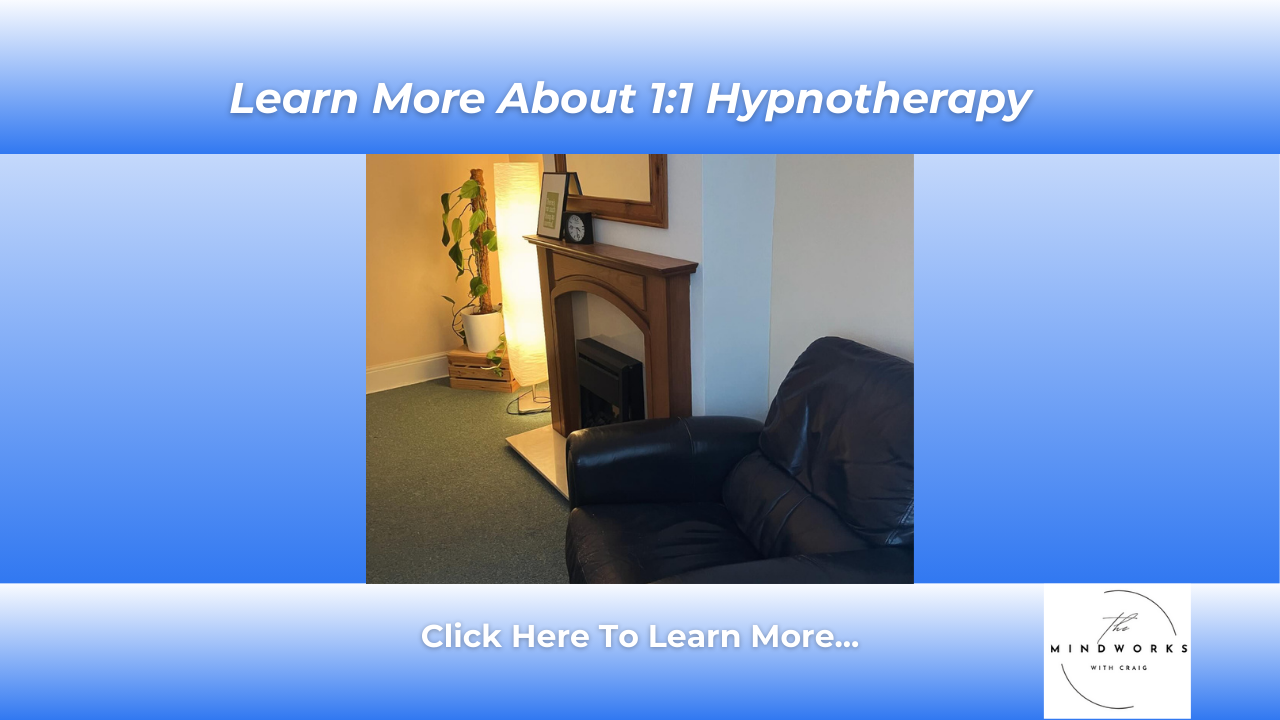
🧩 1:1 Hypnotherapy
For deeper, ongoing therapeutic work.
These sessions help you explore patterns, beliefs and emotional responses, using hypnotherapy and psychological tools to support lasting change.
This is a good fit if you want space to work through things gradually and properly.

📚 Online Courses
If you prefer to work independently, the courses offer structured, self-paced learning using the same frameworks I teach in sessions.
You’ll gain understanding, tools and clarity, with the flexibility to move at your own speed.
⚙ What ADHD Actually Is (The Brain Science Bit)
Modern neuroscience shows ADHD is more than distraction. It’s a difference in how brain networks coordinate attention.
Here’s what the latest research (including Dr. Andrew Huberman’s work) tells us:
-
🧠 DMN Overactivation – The Default Mode Network stays too active when trying to focus, pulling attention inward (daydreaming, rumination).
-
🌐 Insula Dysregulation – The insula (your brain’s attention switchboard) may struggle to shift focus between thoughts and external cues.
-
🌀 Dopamine Imbalance – Dopamine helps your brain filter noise and sustain attention. In ADHD, this system can be underactive — making it harder to “lock on.”
-
🔄 Executive Function Friction – Tasks that feel irrelevant, overwhelming, or too abstract don’t spark the mental engagement needed to start or continue.
This doesn’t mean you can’t focus. It means your brain needs support — not shame.
🔑 What Mental Strength Means with ADHD
In The Mind Works, Mental Strength isn’t the ability to power through.
It’s the ability to:
-
Notice when your attention drifts.
-
Pause gently without judgment.
-
Come back to what matters — again and again.
For those with ADHD, this means starting where you are, not where you think you should be.
With the right support, focus is a skill you can grow — even if it feels impossible right now.
🔧 Tools That Can Help (Especially With ADHD)
Each of these tools is designed to work with your brain, not against it. They can all be adapted to ADHD.
1. Tower Block – Understand Your Current Capacity
-
ADHD isn’t constant — it fluctuates with energy, stress, sleep, and sensory load.
-
Tower Block helps you name where you are today (e.g., Level 3 = Comfort-seeking gear).
-
This lets you match tools to your current state (not force change when your system isn’t ready).
2. Pressure Gauge + HRV
-
Tracks your nervous system load and helps you notice when your “fuel tank” is low.
-
HRV tracking (e.g. Oura, Welltory) can show how recovery, food, sleep, and overstimulation affect focus.
-
Helps prevent the crash-and-burn cycle often seen in ADHD.
3. Parts of Self
-
ADHD can feel like internal conflict: one part wants to act, another part avoids.
-
Our model helps you understand this inner tension between your Protective, Actual, and Ideal Selves — and gently move forward without blame.
4. Breathwork + Interoceptive Awareness
-
Simple breath exercises (like 6 breaths per minute) increase focus and calm.
-
Contrary to old myths, people with ADHD are aware of their internal state — but often overwhelmed by it.
-
Breathwork helps you create space between sensation and reaction.
5. Sensory Focus Training
-
ADHD brains often respond well to targeted sensory attention.
-
Practice holding your gaze on a fixed point (1–2 minutes), or consciously limit blinking — this resets visual attention circuits and dopamine tone (Huberman protocol).
-
Combine with movement first (e.g. stretch, squats, brief walk).
6. SSRG Nutrition & Blood Sugar Support
-
Stable blood sugar = more stable attention.
-
SSRG (Simple, Steady, Ready, Glow) rhythms can help reduce spikes, crashes, and reactive eating that disrupts dopamine levels.
-
Especially useful in ADHD-related emotional eating or energy crashes.
7. Pacing and Dopamine Cycles
-
Work with dopamine rhythms, not against them.
-
Use the Pomodoro Technique or Ultradian Cycles: 25 mins of focus, then 5–10 mins of movement or rest.
-
Meaningful progress comes from rhythm, not relentless pressure.
🎧 Highly Recommended: Andrew Huberman on ADHD
“Dopamine is the conductor of focus. ADHD is not a lack of willpower — it’s a conductor that’s not tuning the orchestra.”
In this podcast, Huberman explains:
-
Why ADHD brains struggle with suppression of the DMN.
-
The role of dopamine, blink rate, and exteroceptive awareness.
-
Practical tools (many included above) to support natural focus.
🎧 Listen to “ADHD & How Anyone Can Improve Their Focus” – Huberman Lab Podcast
📍 UK-Based Support for ADHD
✅ NHS and Diagnosis:
-
Speak to your GP – ask for a referral to an ADHD assessment service (waiting lists may apply).
-
Right to Choose services may allow private assessments via NHS funding (e.g. Psychiatry UK).
✅ Charities & Organisations:
-
ADDISS – ADHD Information Service
-
UK Adult ADHD Network – Professional guidance and support.
✅ ADHD-Friendly Tools & Apps:
-
FocusMate – body double/co-working support.
-
Structured App – ADHD-friendly calendar/task management.
-
Braintoss / Otter.ai – get thoughts out of your head fast.
-
Tide – Pomodoro + soothing soundscapes.