Stress & Anxiety
Understanding why stress and anxiety develop when the nervous system carries sustained pressure.
What People Often Notice
Stress and anxiety rarely appear without context.
For many people, the shift develops gradually.
Energy may feel lower than it used to.
Patience may become shorter.
Sleep may feel lighter or less restorative.
You may notice patterns such as:
- persistent worrying or racing thoughts
• difficulty relaxing even when you have time to rest
• feeling easily overwhelmed by everyday responsibilities
• becoming more reactive to small frustrations
• tension in the body or difficulty switching off mentally
Some people feel constantly alert or on edge.
Others notice periods of exhaustion that follow times of heightened stress.
These experiences often develop during periods of sustained demand or pressure.
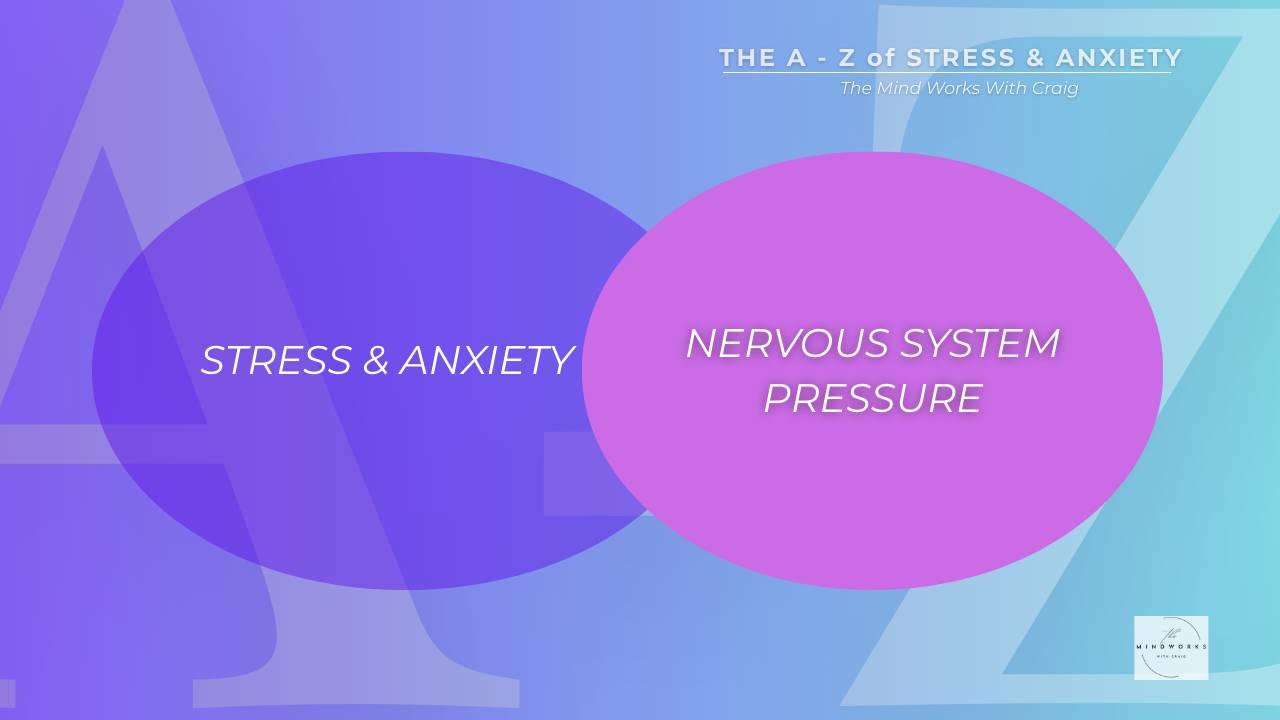
Within the Mind Works framework, they are frequently linked to nervous system pressure.
When the nervous system carries more strain than it has had time to recover from, the brain begins to prioritise protection and threat detection.
As a result, emotional regulation and mental calm can become less stable.
If you would like to understand more about how stress influences mood, focus and behaviour, you may find The Hidden Impact of Stress guide helpful.
Understanding Stress and Anxiety
Stress and anxiety are often treated as emotional problems.
In practice, they are strongly influenced by the state of the nervous system.
When the nervous system is balanced and well regulated, the brain can move flexibly between focus, rest and emotional regulation.
People can usually:
- think clearly about situations
• respond calmly to challenges
• switch off and recover after periods of effort
• regulate emotional reactions
When pressure rises and remains elevated, these abilities can narrow.
The brain begins to prioritise alertness and problem detection.
Thoughts may become more repetitive.
Attention may become focused on potential problems.
Emotional reactions may occur more quickly.
This can create the experience many people describe as anxiety.
In therapeutic practice, these patterns are sometimes interpreted as personality traits or emotional weakness.
In reality, they often reflect a nervous system that has shifted into a more protective state.
Many of the ways stress and anxiety appear in everyday life are explored further in the A–Z of Stress & Anxiety series, which explains the different forms these experiences can take.
Why This Pattern Develops
Stress and anxiety are closely connected to the nervous system’s perception of demand.
When the brain detects pressure, it initially increases alertness.
Attention narrows toward potential threats or uncertainties.
Energy is directed toward immediate problem solving.
This response is designed to help us respond to challenge.
If this state continues for longer periods without sufficient recovery, the nervous system can remain in a more vigilant mode.
Mental quiet becomes harder to access.
The body remains more alert.
Emotional reactions may occur more quickly.
Many people experience this as constant tension or worry.
The mind attempts to solve problems continuously, even when rest would be more helpful.
This often reflects a nervous system carrying sustained load rather than a personal inability to relax.
The biological processes involved in this shift are explained in more detail in The Hidden Impact of Stress, which explores how stress chemistry influences mood, focus and behaviour.
What Happens in the Body
Stress and anxiety are closely linked to several biological systems that regulate alertness and recovery.
Cortisol and stress chemistry
Cortisol helps mobilise energy during periods of demand.
When this system remains activated for longer periods, sleep can become lighter and emotional tolerance may narrow.
Threat detection
The brain’s protective systems become more sensitive under sustained pressure.
This can increase vigilance and make the mind more likely to scan for potential problems.
Breathing and muscle tension
When the nervous system remains alert, breathing patterns and muscle tension can change.
This can contribute to the physical sensations people often associate with anxiety.
Energy allocation
The body directs more resources toward protection and less toward recovery.
This can lead to fatigue, difficulty relaxing and fluctuations in energy levels.
These biological adjustments influence everyday experience.
The mind may feel busier.
The body may feel tense.
Rest may feel harder to access.
A fuller explanation of how stress influences these systems can be found in The Hidden Impact of Stress guide.
How This Shows Up in Everyday Life
When nervous system pressure remains elevated, several patterns often begin to appear.
Some people notice:
- persistent worrying or overthinking
- difficulty switching off mentally
- irritability or emotional reactivity
- poor sleep or waking during the night
- physical tension in the shoulders, jaw or chest
- feeling constantly alert or unable to relax
Over time this can create a difficult cycle.
Sleep becomes less restorative.
Energy becomes less stable.
The mind attempts to solve problems more frequently.
Many people then become frustrated with themselves for feeling anxious or unable to relax.
From a nervous system perspective, these patterns often reflect state dependent capacity as opposed to anything relating to character.
They are signals that the system is carrying more pressure than it has had time to recover from.
Regulation and Recovery
When nervous system pressure begins to reduce, stress and anxiety often begin to settle.
Thinking becomes clearer.
Emotional reactions become easier to regulate.
Sleep becomes more restorative.
The body gradually shifts back toward recovery rather than protection.
Regulation work usually involves restoring the physiological conditions that support emotional stability.
This may include:
- improving sleep quality
• stabilising daily rhythms
• reducing ongoing physiological stress
• supporting nervous system regulation
These changes gradually rebuild the system’s capacity to recover and regulate.
Many of the mechanisms involved in this process are explored further in The Hidden Impact of Stress, which explains how stress influences mood, focus and behaviour.
Moving Forward
Reducing stress and anxiety rarely begins with simply trying to think differently.
It usually begins with understanding how much pressure the nervous system has been carrying and how this pressure has influenced mood, energy and emotional regulation.
Once these patterns become clearer, it becomes easier to begin restoring stability.
Many people begin this process with a Reset Session.
During the session we explore the patterns currently affecting your nervous system and introduce practical techniques that support regulation and recovery.
This may include guided relaxation, breathwork, hypnosis and strategies that help reduce ongoing nervous system pressure.
Learning More
If these patterns feel familiar, you may find the following resources helpful:
- the Nervous System Pressure page, which explains the core model
- The Hidden Impact of Stress, which explores how stress influences mood, focus and behaviour
- the A–Z of Stress & Anxiety series, which explains the many ways stress and anxiety can appear in everyday life
If you would like personalised support, you can also book a Reset Session to begin restoring stability in your nervous system.
Many people find that when nervous system pressure begins to reduce, calm, clarity and emotional balance begin to return naturally.
Practical Regulation Tools
If you would like to begin working with these ideas straight away, the Core Tools Course introduces simple practices that help the nervous system settle and restore stability.
This includes:
- simple awareness tools that improve emotional regulation
- practical techniques that help restore focus and clarity
- breathing practices that calm the nervous system
These tools provide a structured starting point for reducing nervous system pressure in everyday life.
Even More Ways to Work With Me
There’s no single right way to begin. Some people want immediate relief. Others want deeper personal work. Some prefer to learn at their own pace.
The options below are designed to meet you where you are now not where you think you should be.
If you’re unsure which path is right for you, starting with a Reset Session is usually the simplest option.
🔄 Reset Sessions
If you feel stuck, overwhelmed, or at a crossroads, a Reset Session offers a focused pause and a way forward.
In 90 minutes, we work to settle your system, make sense of what’s happening, and create a clear, practical next step.
This is often the best place to start if things feel urgent or tangled.
🧩 1:1 Hypnotherapy
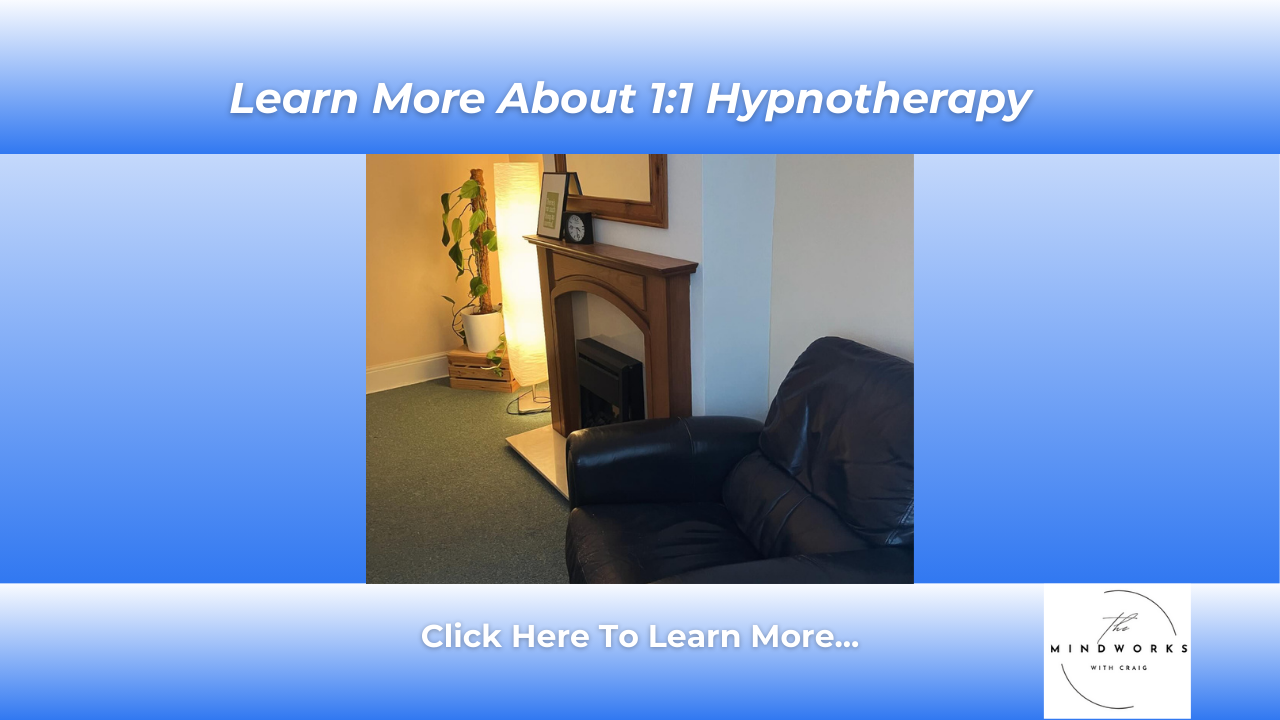
For deeper, ongoing therapeutic work.
These sessions help you explore patterns, beliefs and emotional responses, using hypnotherapy and psychological tools to support lasting change.
This is a good fit if you want space to work through things gradually and properly.

📚 Core Concepts
Explore the Core Concepts that sit at the heart of the Process of Change.
These courses help you understand how patterns form, why you get stuck, and what supports lasting change.
This is a good place to start if you want clarity and structure, with the flexibility to work at your own pace.