Nervous System Pressure vs Conscious Capacity and Control
Feb 27, 2026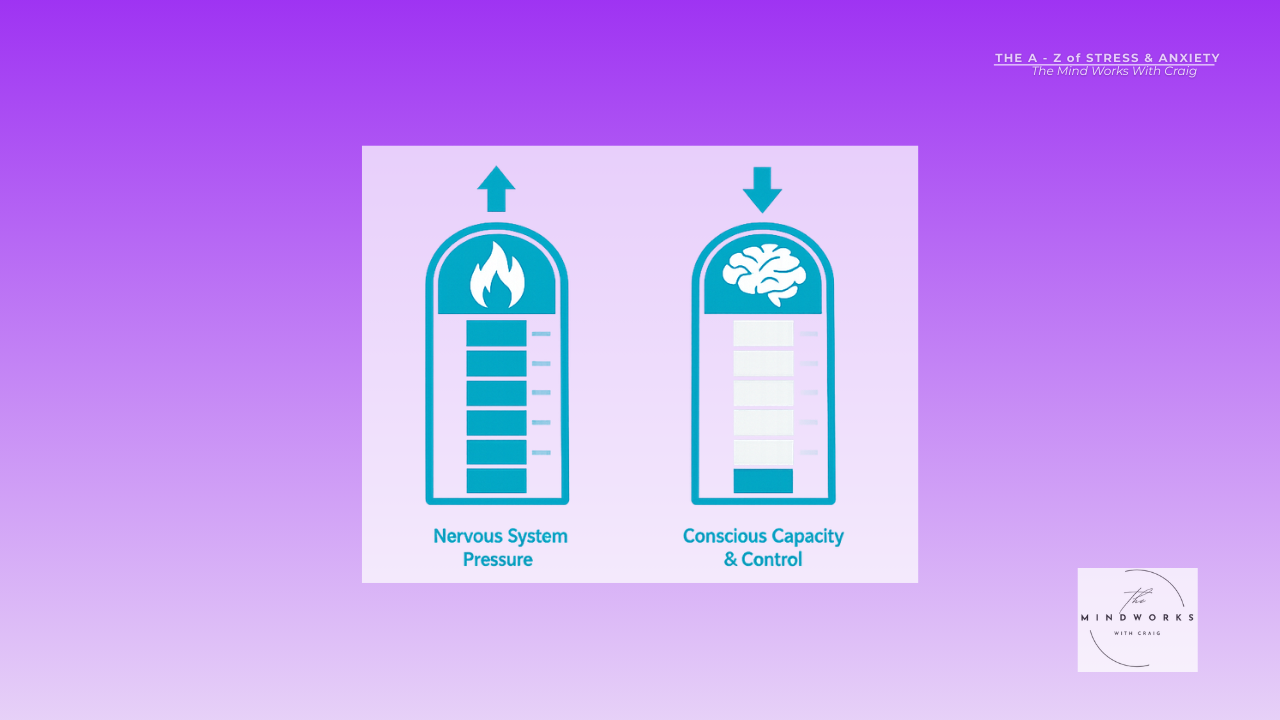
There is one principle that sits underneath everything I teach.
Nervous system pressure is the accumulated strain your brain and body are managing at any given time.
When nervous system pressure increases, conscious capacity and control narrow.
When conscious capacity and control narrow, behaviour shifts.
That sequence explains far more than we are usually taught.
What Do I Mean by Nervous System Pressure?
Strain refers to the total demand your system is carrying relative to how much recovery it has had.
That demand may come from relationship tension, financial pressure, work instability, parenting responsibility, health concerns, or exposure to wider world events.
It also includes poor sleep, unstable energy levels, inconsistent or inadequate nutrition, blood sugar swings, chronic pain, illness, inflammatory load, hormonal shifts, caffeine or alcohol, and unresolved trauma.
The nervous system processes all of it as demand.
It does not separate emotional strain from physical strain. It simply registers pressure.
Why This Matters
Most behavioural advice assumes stable conscious capacity and control.
Eat differently.
Drink less.
Exercise more.
Be calmer.
Be more productive.
All of those suggestions rely on the part of the mind we consciously steer.
When nervous system pressure is high, that steering influence narrows.
This is not weakness.
It is a predictable physiological shift.
What Happens When Pressure Rises
As nervous system pressure increases:
Cortisol remains elevated.
Blood sugar becomes less stable.
Insulin sensitivity may reduce.
Fat oxidation becomes less accessible.
Inflammatory signalling increases.
Threat detection sharpens.
Executive bandwidth narrows.
Energy is reallocated toward protection.
Protection becomes prioritised over optimisation.
When protection rises, conscious capacity and control narrow.
Behaviour follows.
How This Explains Real Life
Under sustained pressure:
Patience reduces.
Cravings increase.
Alcohol becomes more appealing.
Exercise feels harder to initiate.
Financial decisions become more reactive.
Relationship conflict escalates more easily.
Procrastination increases.
Withdrawal increases.
Anxiety intensifies.
Burnout develops.
These are not separate problems.
They are different expressions of reduced conscious capacity and control under pressure.
The Weight & Metabolism Link
Chronic nervous system pressure affects metabolism directly.
Elevated cortisol can:
Increase appetite and craving.
Increase blood sugar.
Reduce impulse regulation.
Inhibit insulin sensitivity.
Shift the body toward storage rather than fat oxidation.
Increase abdominal fat storage.
Disrupt digestive function.
At the same time, reduced conscious capacity and control makes long-term nutritional decisions harder to sustain.
Weight gain under chronic pressure is therefore both physiological and behavioural.
It is rarely just about calories.
The Strategic Sequence
If pressure is high, adding further demand increases pressure further.
More pressure.
Narrower conscious capacity and control.
Stronger protective behaviour.
Restriction under high cortisol can elevate cortisol further.
Self-criticism increases pressure.
Urgency increases pressure.
The cycle reinforces itself.
The sequence must reverse.
Reduce nervous system pressure.
Restore conscious capacity and control.
Then guide behaviour.
When pressure reduces:
Sleep deepens.
Blood sugar stabilises.
Inflammation lowers.
Executive influence strengthens.
Cravings reduce.
Impulse regulation improves.
Fat burning becomes more accessible.
Behaviour becomes easier to guide.
One Organising Mechanism
This framework connects:
• Anxiety
• Burnout
• ADHD vulnerability
• Weight and metabolic health
• Pain and illness
• Relationships and financial stress
• Direction, rhythm and fuel
It provides a single organising mechanism.
Nervous system pressure shapes conscious capacity and control.
Conscious capacity and control shape behaviour.
Understanding that sequence changes how we approach change itself.
If this framework resonates, you may find it helpful to explore the A–Z of Stress & Anxiety.
Each entry takes a common experience — from cravings and exhaustion to overthinking and low mood — and explains how nervous system pressure may be influencing it.
It offers a structured way to see how this might be showing up in your own life, and where conscious capacity and control may currently be narrowing.
Anxiety, Weight Gain, or Patterns That Feel Stuck?
Understand What May Be Driving Them
Many people approach anxiety and weight loss as separate problems.
In practice, both are often influenced by nervous system load.
When stress remains elevated, blood sugar stability shifts. Cravings increase. Fat burning becomes less efficient. Sleep lightens. Focus narrows. Emotional tolerance reduces.
At the same time, internal conflict intensifies. One "part of you" seeks progress. Another "part of you" seeks relief.
Over time, this can present as anxiety, weight gain, burnout, or more complex patterns that feel resistant to willpower alone.
Understanding how your nervous system is functioning is often the first step toward steadier change.
Stay connected with news and updates!
Join our mailing list to receive the latest news and updates from our team.
Don't worry, your information will not be shared.
We hate SPAM. We will never sell your information, for any reason.