International Women’s Day – What I've Learned About Women, As A Male Therapist
Mar 08, 2026
International Women’s Day – What I've Learned About Women, As A Male Therapist
Today is International Women’s Day.
I’m a male therapist, and over the course of my career around 80% of my clients have been women.
That wasn’t what I expected or planned when I first opened my practice.
When I started nearly ten years ago, my intention was actually to work primarily with men. At that time the conversation around men’s mental health wasn't was it is today, and I believed there was space for a male therapist supporting men.
The reality was very different.
For about a month I had almost no clients at all.
It quickly became clear that if I wanted to build a practice, I needed to open the door to everyone.
And very quickly, many of the people who came through that door were women.
Most commonly they were seeking help for anxiety, stress, and difficulties around food, weight, or self-confidence.
What also became clear very quickly was how spectacularly underprepared I was to fully understand the complexity of women’s experiences.
Listening and Learning
In the early months of practice, certain themes appeared again and again.
Conversations about feeling responsible for everyone else.
Trying to keep everyone happy.
Being kind, dependable, supportive.
Holding everything together.
Often while quietly carrying exhaustion or burnout.
Many women described feeling as though they needed to keep up with life, even when their energy was running dangerously low.
And alongside these conversations, I began hearing words and experiences that, if I am honest, I had previously understood only in the most superficial way.
Polycystic ovary syndrome.
Endometriosis.
Fibroids.
PMDD.
Fibromyalgia.
Irregular or dysregulated cycles.
As a man, I probably held a fairly naïve view of the influence that the female hormonal system and reproductive health could have on mood, stress tolerance, and overall wellbeing.
As a therapist, that had to change very quickly.
The Complexity of Women’s Health
One of the things that became very clear is how deeply interconnected physical health and emotional wellbeing can be.
Hormonal cycles can influence mood, energy, sleep, appetite, and stress tolerance.
For many women these shifts are not small or subtle. They can be profound.
Yet in everyday life these experiences are often misunderstood, minimised, or dismissed.
Some women arrive in therapy already doubting themselves.
Wondering whether they are simply “not coping well enough”.
When in reality they may be navigating biological, emotional, and social pressures simultaneously.
Motherhood and the Conversations We Don’t Always Have
Another area that surprised me early in my career was how rarely some aspects of motherhood are openly discussed.
Fertility struggles.
The emotional toll of conception difficulties.
The often exhausting and sometimes heart-breaking process of IVF.
Pregnancy complications.
And then the experience of childbirth itself.
For some women, birth is a positive and empowering experience.
For others it can be traumatic.
I firmly believe that women who experience traumatic birth should have rapid access to psychological support afterwards.
Yet this is still not consistently available.
Post-Natal Mental Health
Post-natal depression is discussed far more openly than it once was, but there is still a long way to go.
Many new mothers feel enormous pressure to appear grateful, happy, and fulfilled.
Admitting that the early months of motherhood can be overwhelming, confusing, or emotionally painful can still feel difficult.
In the therapy room, these conversations are far more common than many people might imagine.
Normalising these experiences and ensuring that support is accessible remains incredibly important.
The Reality of Domestic Abuse
Perhaps the most distressing discovery early in my career was the frequency with which women described coercive, controlling, or abusive relationships.
Not always obvious physical violence.
But patterns of control.
Isolation.
Psychological manipulation.
Financial pressure.
And sometimes far more severe abuse.
Very early in my career I undertook training with Women’s Aid so that I could better recognise and respond to these situations.
It was one of the most important professional decisions I made.
When Everything Is Blamed on Hormones
From an outsider’s perspective, I sometimes notice two very different narratives appearing around women’s mental health.
The first is:
“Everything is hormonal.”
Many women understandably reach for this explanation when they notice shifts in mood, energy, or resilience.
“I feel like this because of my cycle.”
“Maybe it’s perimenopause.”
“It must be hormonal.”
Hormones absolutely matter.
They can influence mood, metabolism, sleep, appetite, and stress tolerance in powerful ways.
But they are rarely the only factor.
Very often there are many other pressures present as well.
Relationships.
Work.
Care responsibilities.
Health challenges.
Life transitions.
When all of these pressures combine, the nervous system can begin to feel overwhelmed.
When Hormones Are Ignored
The opposite problem also appears.
Sometimes hormonal influences are completely overlooked.
This is particularly common in the world of weight loss.
The female hormonal system has a significant influence on metabolism, appetite, fluid balance, cravings, and energy expenditure.
Weight can fluctuate week to week during the menstrual cycle for reasons that have nothing to do with body fat.
Water retention alone can change body weight by several pounds.
Yet most weight-loss advice treats the body as though it functions in a completely stable way every day of the month.
This simply isn’t realistic.
Understanding the rhythms of the body can remove a great deal of unnecessary frustration and self-criticism.
Chronic Conditions and the Nervous System
Another condition that appeared frequently in conversations with female clients was fibromyalgia.
Many women had spent years navigating tests before eventually receiving this diagnosis, which often includes fatigue, widespread pain, sleep disruption, and brain fog once other medical causes have been ruled out.
This led me to explore research examining the relationship between earlier trauma or prolonged stress and increased nervous system sensitivity.
In some cases, fibromyalgia may reflect a nervous system that has spent a long time carrying more strain than it has had the opportunity to recover from.
Understanding this connection does not minimise the reality of the condition. If anything, it highlights how closely the body and mind are connected.
A Perspective from the Therapy Room
After nearly a decade of listening to women describe their experiences, one thing has become very clear.
Women are often carrying far more than is immediately visible.
Responsibilities.
Expectations.
Emotional labour.
Health challenges.
Social pressures.
And often an internal pressure to keep going, keep coping, and keep looking after everyone else.
International Women’s Day is an opportunity to recognise that reality.
Not only through celebration, but through understanding.
So What Have I Learned...
Working with women over the years has reshaped my understanding of stress, resilience, and mental health in ways I could never have predicted when I first opened my practice.
It has also reinforced something I see every day in the therapy room.
When people feel understood, supported, and able to make sense of their experiences, change becomes far more possible.
And sometimes that process simply begins with listening.
Today, on International Women’s Day, it feels important to acknowledge the strength, complexity, and resilience of the women I have had the privilege to work with over the years.
And to continue learning from those conversations.
Understanding What the Nervous System Is Carrying
One of the most consistent themes I see in the therapy room is that people are often carrying far more pressure than they realise.
Work demands.
Relationships.
Health challenges.
Hormonal changes.
Parenting responsibilities.
Life transitions.
Over time these pressures can accumulate in the nervous system and begin to influence mood, energy, focus, and behaviour in ways that are not always obvious at first.
If you would like to explore this idea further, the following pages may be helpful.
Nervous System Pressure
Understanding how stress gradually influences mood, focus, energy and behaviour.
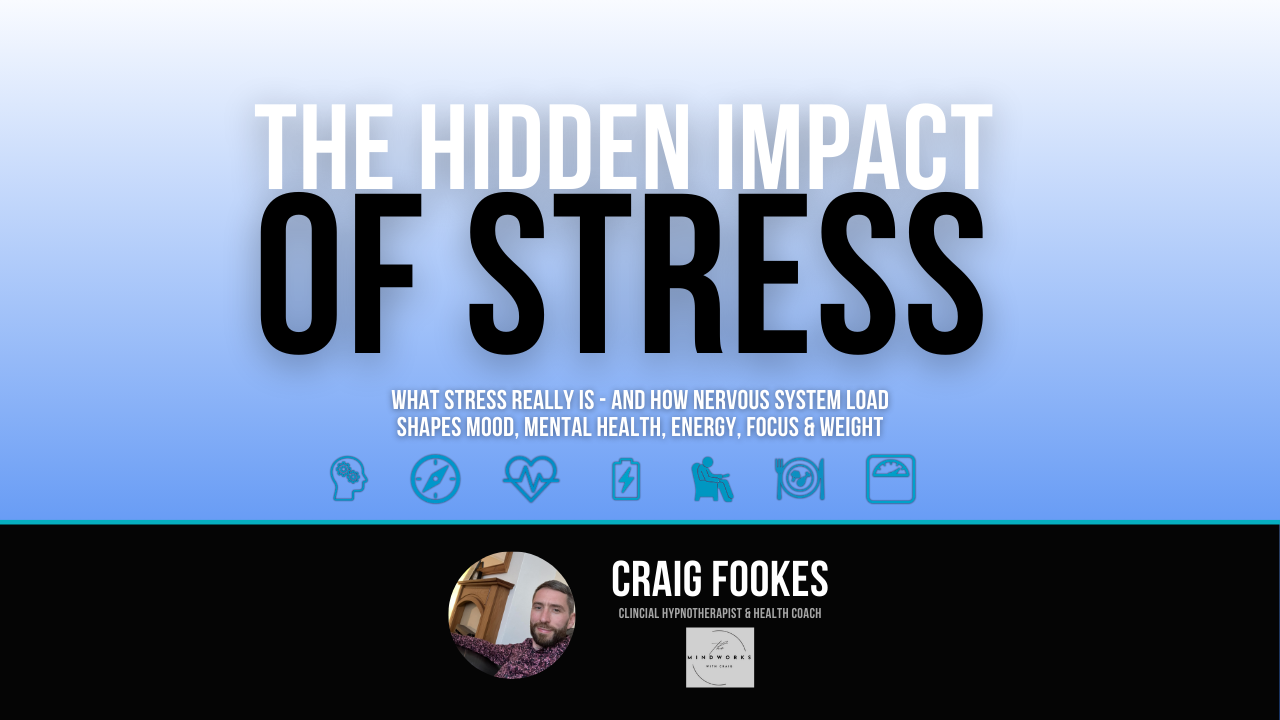
The Hidden Impact of Stress
A deeper look at how sustained stress can affect both mental and physical health.
Menopause and Anxiety
Understanding how hormonal shifts and life transitions can influence emotional wellbeing.
Fibromyalgia and the Nervous System
Exploring the relationship between chronic stress, nervous system sensitivity, and persistent pain.
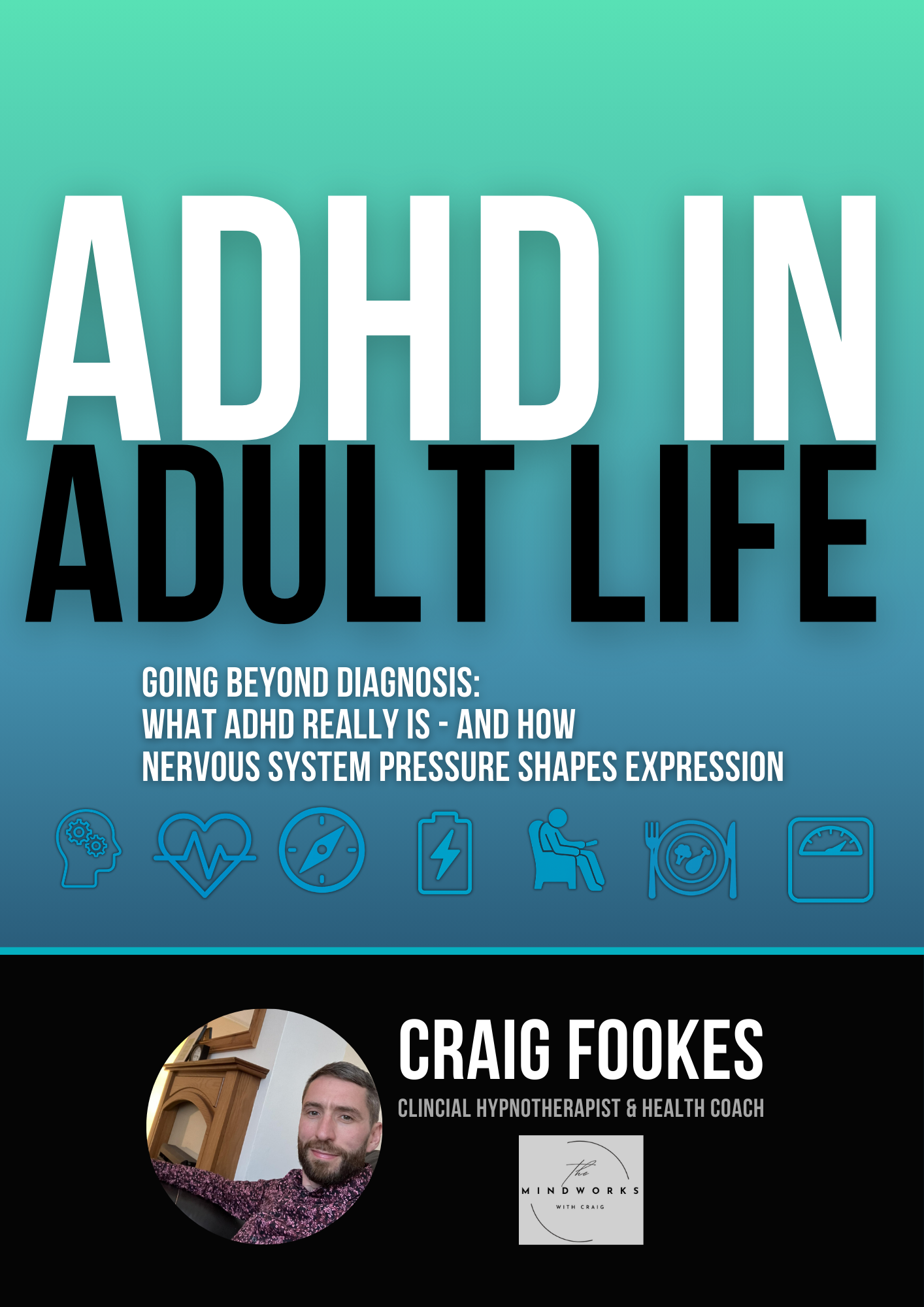
ADHD in Adult Life
Understanding how stress and nervous system regulation can influence attention, focus and motivation.
Sometimes the first step toward change is simply recognising how much your system has been carrying.
Anxiety, Weight Gain, or Patterns That Feel Stuck?
Understand What May Be Driving Them
Many people approach anxiety and weight loss as separate problems.
In practice, both are often influenced by nervous system load.
When stress remains elevated, blood sugar stability shifts. Cravings increase. Fat burning becomes less efficient. Sleep lightens. Focus narrows. Emotional tolerance reduces.
At the same time, internal conflict intensifies. One "part of you" seeks progress. Another "part of you" seeks relief.
Over time, this can present as anxiety, weight gain, burnout, or more complex patterns that feel resistant to willpower alone.
Understanding how your nervous system is functioning is often the first step toward steadier change.
Stay connected with news and updates!
Join our mailing list to receive the latest news and updates from our team.
Don't worry, your information will not be shared.
We hate SPAM. We will never sell your information, for any reason.